

The Milky Way Wakes Up: Stargazing in Capitol Reef
Posted in: Nature, Outdoor adventures, Special Places on May 28, 2026.
May is a transition month. The bright band of the Milky Way’s core is waking up after a winter of being on the wrong side of the sun. And for the first time in months, the evening temperatures are warm enough to lie on a rock at 11 PM without four layers. It’s a good window. Just a slightly different one from high summer.
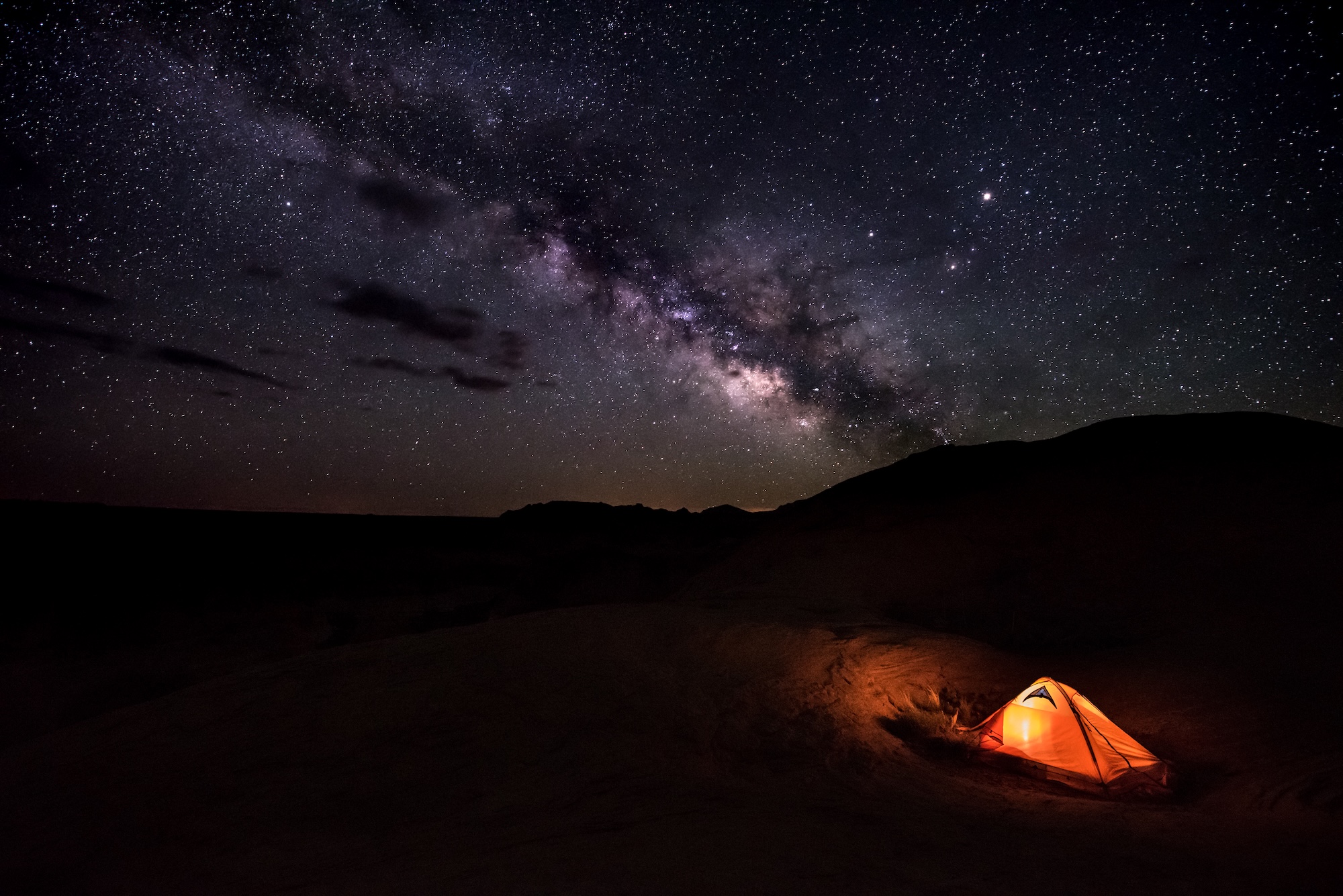
Photo by Kris Wiktor courtesy of Shutterstock
The Honest Timing
Something worth knowing before you plan a night around this: in early May, the Milky Way’s core — the bright, thick part most people come to see — is not up in the evening. It rises in the pre-dawn hours.
Here’s roughly how it works. The galactic core sits on the winter side of the sky from November through March, which means the sun is between us and it. Starting in late April, it begins to come back into view, first as a pre-dawn phenomenon, then rising earlier and earlier as the weeks go on. By late May, the core is reliably up by around midnight in the southeast. By June and July, it clears the horizon before full dark. If your trip is primarily about Milky Way photography, consider July. That’s peak.
If your trip is in May, you’ve got two honest options. Stay up late (or sleep a few hours and set an alarm for 2 AM), or head out to an overlook an hour before sunrise. Both work. The pre-dawn option has quietly become our favorite around here. You get the sky to yourself, and then a sunrise to cap it. Not a bad deal.
Where to Watch From
A few places near the Lodge that are reliably good:
- Panorama Point. Elevated, open in all directions, no cliffs blocking any part of the horizon. Probably the single best naked-eye spot in the park. On State Route 24, about 2.5 miles west of the Visitor Center. Under 15 minutes from the Lodge.
- Goosenecks Overlook. Slightly further, quieter, with the Fremont River canyon in your foreground if you’re shooting photos.
- The end of the Scenic Drive. If you’re already in the park for the day, the last pullouts on the Scenic Drive have very dark skies and almost no night traffic.
- The Fruita area. The Fremont River runs through Fruita, and between the orchards and the cliffs it’s a quiet place to set up. The campground also hosts monthly moon walks during the season — worth checking the NPS calendar to see if one lines up with your trip.
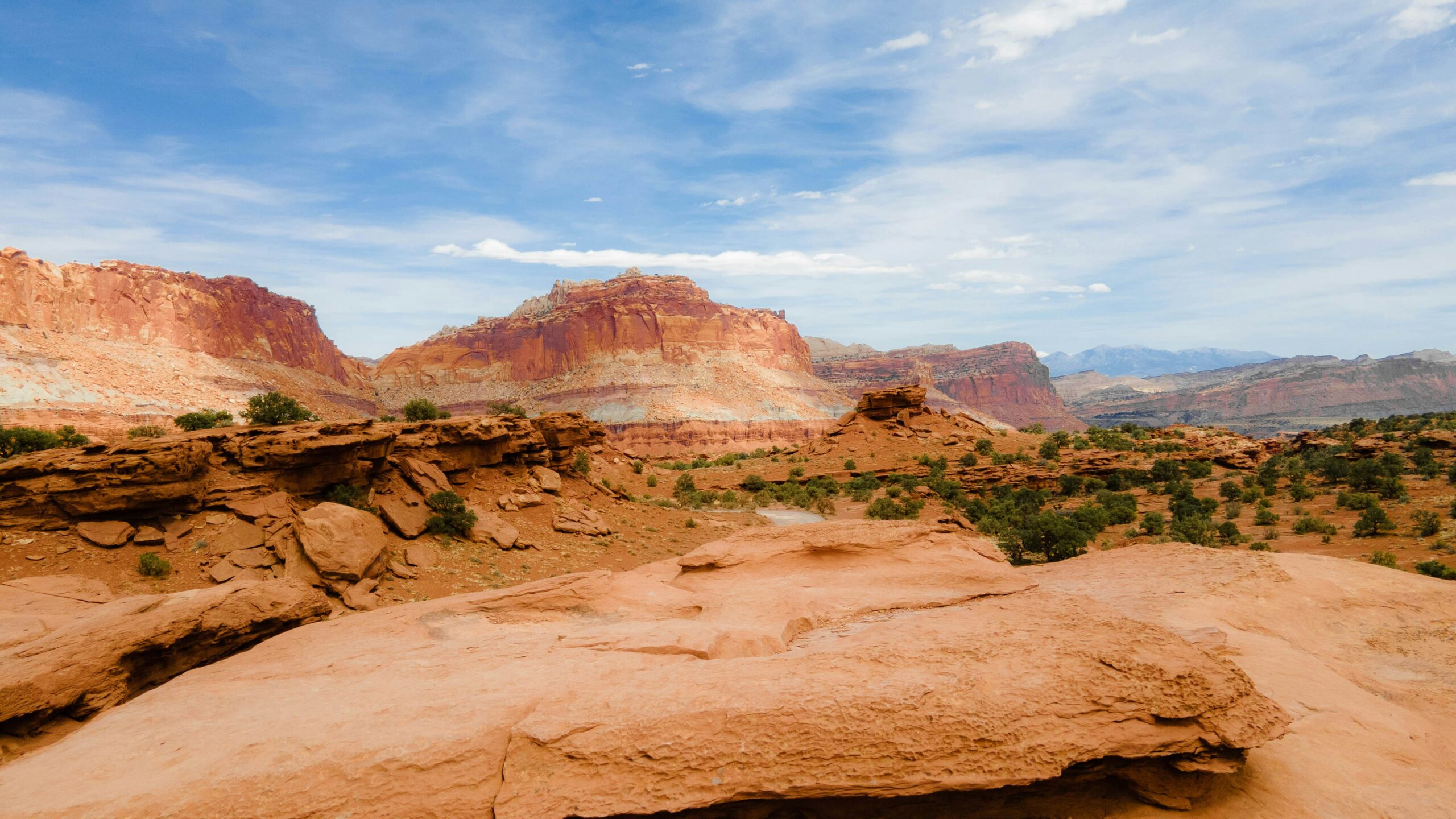
Photo by Deep Doshi courtesy of Unsplash
What You’ll Actually See
Don’t underestimate what’s up on a May evening even without the core. A short list of what’s visible just after dark:
- Leo. The lion sits high in the south after sunset. The triangle of stars that forms the hindquarters is unmistakable.
- The Big Dipper. Nearly overhead. Use the two stars at the end of the bowl to find Polaris.
- Virgo and Spica. Due south. Spica is the bright blue-white star.
- Jupiter and Saturn. On and off through May — check your sky app for current positions.
Later in the night, Scorpius starts rising in the southeast around the same time the Milky Way core does. When you see the curved hook of the scorpion’s tail clear the horizon, the core is about to come up with it.
Phone Camera vs. The Real Thing
One piece of honest advice. Recent iPhones and Pixels in night mode can capture a Milky Way shot that looks astonishing. Your eye will not see the same thing, and some visitors come away disappointed because of it.
Your eye will see a faint, pale river of light through a dense star field, with very little color. The camera does a long exposure and brings out what was always there but sitting below your eye’s threshold. Both images are real. Just know which one you’re getting when you come.
The experience of seeing an actually dark sky with your own eyes is the point. The camera shots are a bonus.
A Few Practical Notes
- Moon phase matters more than almost anything else. A full moon washes out the sky. Check the calendar and aim for the week around new moon.
- Dress warmer than you think. May evenings in Torrey can drop into the 40s even after an 80-degree day.
- Red flashlights only. White light destroys your night vision for 20 minutes. Most phones have a red filter option in accessibility settings.
- Give your eyes 15 to 20 minutes. Don’t check your phone. The stars that weren’t visible when you got there will slowly fill in.
Why It’s Worth Being Here
May isn’t the absolute peak of Milky Way season. We’ll be honest about that. But it’s the first month of the year when warm nights, dark skies, and the first real glimpse of the galactic core all line up. There’s something pretty good about being here just as the season opens up — before the crowds figure out it’s time to come.
If you want to come out this month, we’ve got rooms at the Lodge, and when you get here we can point you toward the right spots depending on the moon phase and when you’re willing to be awake.