

Look A Little Longer
Posted in: Historical places, Travel on August 18, 2026.
A Stop That Rewards Patience
So maybe August has talked you out of a long hike. That’s fair. The sun is persuasive this time of year, and Capitol Reef has plenty of good things that don’t require you to prove anything.
And one of them is the Fremont Culture petroglyph panel along Utah Highway 24.
This isn’t a secret stop. It’s right there in the park, accessible by two wooden boardwalks, and the National Park Service points visitors to it for a reason. But it’s one of those places that gets better if you give it more than thirty seconds. Walk the boardwalk. Look at the cliff. Then keep looking. Usually, the longer you stand there, the more you start to see.
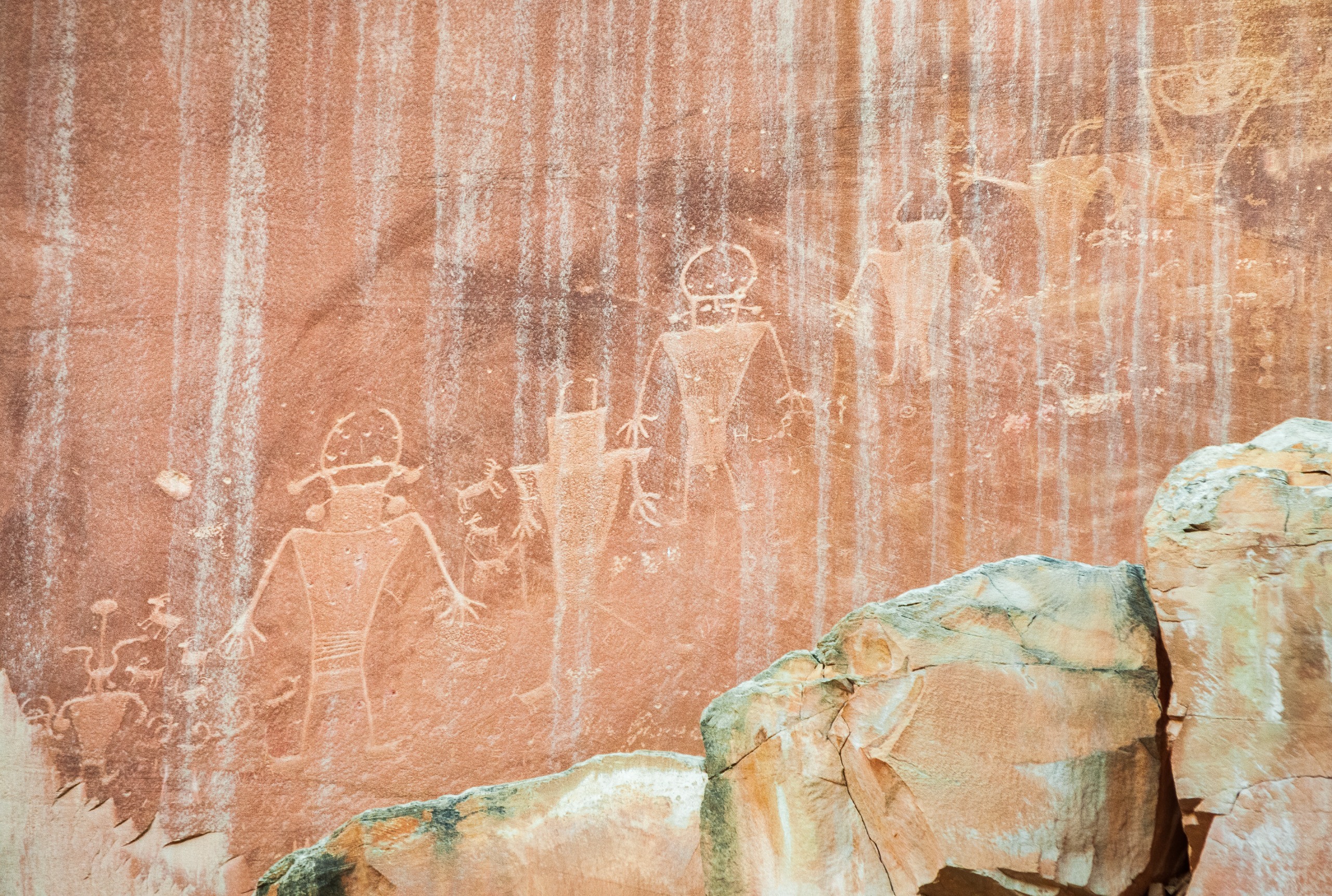
The Fremont Culture petroglyph panels sit right along Utah Highway 24. Photo by Zack Frank via Shutterstock.
What You Are Looking At
The Fremont Culture lived in what is now Utah for about one thousand years, from about 300 to 1300 CE. The park says archeologists named them for the Fremont River canyon, where they were first defined as a distinct culture. And that’s a pretty good reminder that Capitol Reef isn’t just scenery. People have been making a life in these canyons for a very long time.
At the Highway 24 panels, you can see human-like figures, bighorn sheep, other animals, and geometric designs. Some are easy to pick out. Some take a while. The shorter boardwalk gives you views of large human-like figures and bighorn sheep. The longer boardwalk runs along the cliff, where some images are closer but can be harder to see because of the patina over them.
Bring binoculars if you have them. The details are better when you’re not squinting into sandstone (which isn’t much of a plan).
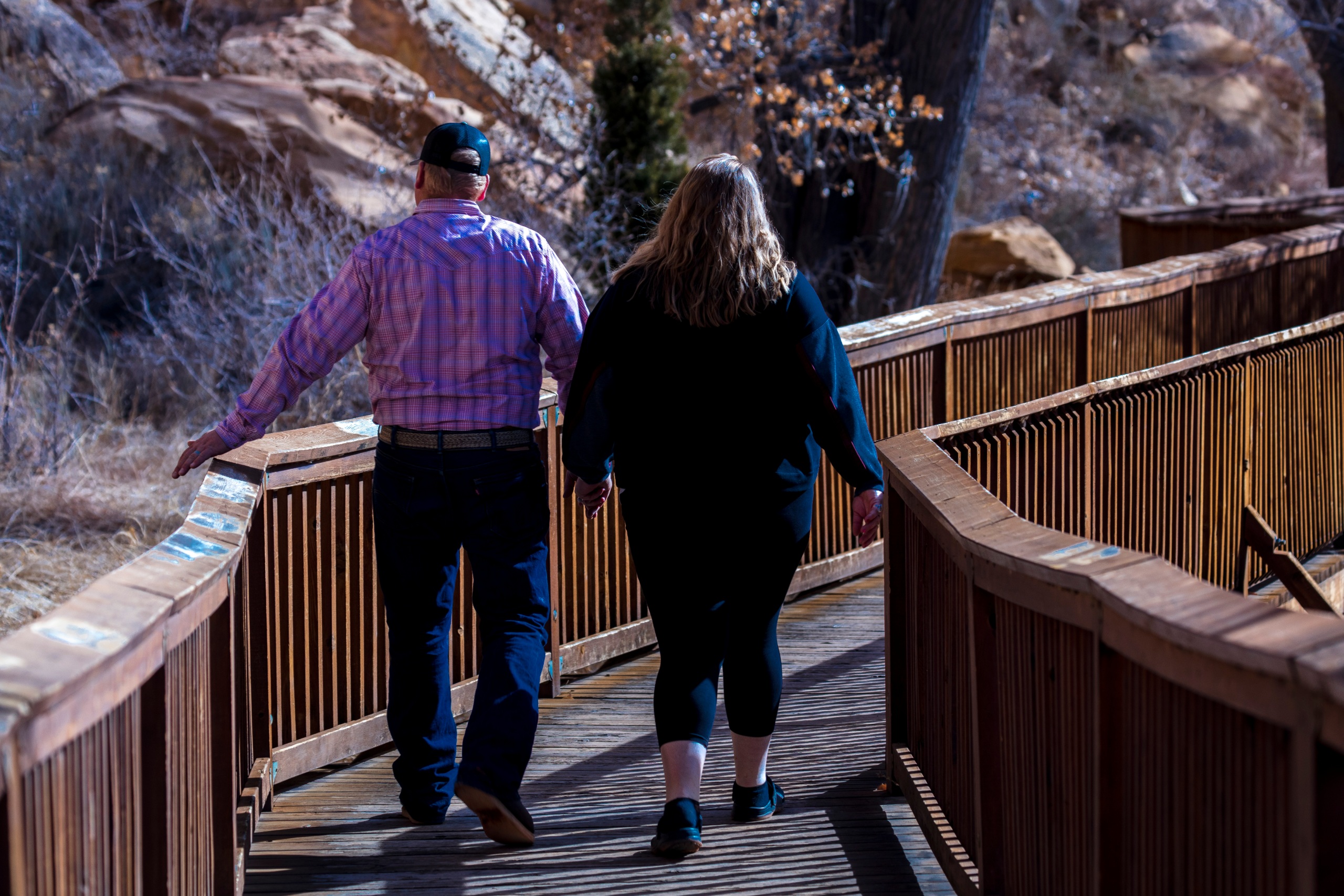
The boardwalks make this one of the easier history stops in the park. Photo by Joseph Sohm via Shutterstock.
Look, Don’t Touch
There is one practical rule here, and it matters: do not touch the petroglyphs. Do not scratch near them, rub them, climb around them, or try to improve the view for the next person. Archeological sites in the park are protected, and the park notes that vandalism is illegal under the Archaeological Resources Protection Act.
But even before you get to the law, there is the simpler thing. These markings have lasted a long time. We should be decent enough to let them keep lasting.
If you want more context, the park has an audio guide at the panel narrated by Rick Pickyavit, who talks about the Fremont people, the Waterpocket Fold, and the larger Native history of this country. It’s worth your time. And it’s a good check on our instinct to think every old image is a puzzle we’re supposed to solve. We don’t have to fully explain every old image before we respect it.
An Easy August Morning
As of the park’s August 16 update, Capitol Reef is fully open and the park is open 24 hours a day. The Visitor Center is open daily from 8:00 a.m. to 4:30 p.m., and the Gifford House is open daily from 9:00 a.m. to 4:30 p.m. The Scenic Drive and Grand Wash roads are listed for standard two-wheel-drive vehicles, while Capitol Gorge Road is closed. Road conditions can change quickly with weather, so the park’s recorded line is still useful: 435-425-3791, press 1, then 4 for road conditions.
And Fruita is still doing its late-summer fruit thing too. The August 14 orchard update lists pears, Capitol Reef Red apples, Ginger Gold apples, and late-season J.H. Hale and Elberta peaches in different orchards, with timing and availability changing by weather and harvest. Press 5 on that same recorded line for orchard and fruit information before you count on picking.
So make it simple. See the petroglyphs while the morning is still kind. Stop in Fruita if the day allows. Let the afternoon belong to shade.
Capitol Reef is full of big views. But this one asks you to look closely. And that’s a pretty good thing to practice.