

Cathedral Valley: Capitol Reef’s Remote North
Posted in: Outdoor adventures on May 1, 2026.
There’s a version of Capitol Reef that most visitors never see. It starts about an hour north of the Fruita Visitor Center, at the end of a set of dirt roads that stay impassable for much of the year. By May, those roads have usually dried out, which puts us in one of the better windows of the year to go.
Cathedral Valley is the park’s northern district. It’s older, emptier, and geologically stranger than the Fruita end. It’s also the part we get the most questions about and, because of the access, the part fewest of our guests actually make it to. If you’ve only seen the Scenic Drive and the Hickman Bridge parking lot, you’ve seen roughly a third of the park.
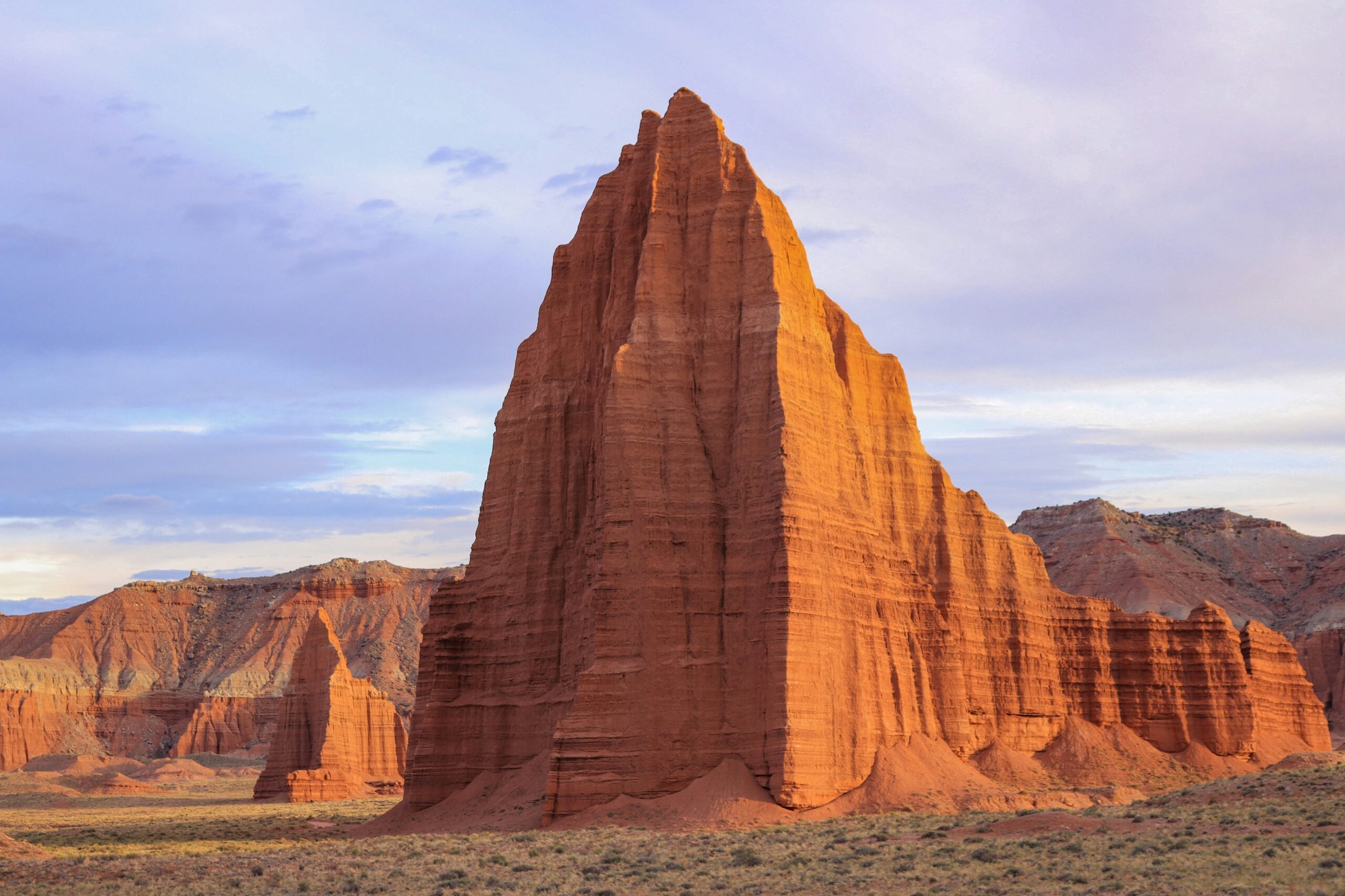
Photo by Josh Behunin courtesy of Unsplash
What’s Actually Up There
The headline features are the Temples of the Sun and Moon — two enormous sandstone monoliths standing alone on an otherwise flat desert floor. They’re not tucked into a canyon or set against a cliff. They’re just out there. Photographs don’t quite capture the scale. You find yourself trying to work out where they’re supposed to fit in the surrounding geology, and the answer is that they’re the last pieces of a softer layer that eroded away around them a long time ago.
The rest of the valley is mudstone hills, gypsum sinkholes, and the kind of quiet that makes your ears feel strange. You’ll often drive an hour without seeing another car, particularly on weekdays. The headline attractions get most of the photos, but honestly the drive in is half the point.
Why May Is the Window
The two main access routes — Hartnet Road and Caineville Wash Road — are both dirt. When dry, they’re a perfectly easy-going drive. When wet, they turn into slick clay that can bog down even capable four-wheel-drive vehicles. Early spring is usually the muddiest stretch, with snowmelt and the occasional late storm keeping things greasy well into April.
By mid-to-late May, the roads typically firm up and the first real window of the year opens. Summer works too, until the monsoon thunderstorms start in July and can briefly turn a dry road back into a sloppy one. May gives you the cleanest access with the smallest weather risk, which is why we tend to point people toward this stretch of the calendar if they’re asking about the remote side of the park.
A Few Things to Bring
This is an adventure, not an ordeal. With a little prep, most folks find it perfectly manageable. A short list of what helps:
- A higher-clearance vehicle. AWD crossovers and SUVs handle it fine in dry conditions. A low-slung sedan is the one setup we’d steer you away from.
- A full tank of gas. There’s nothing out there. Not a pump, not a store, not a gift shop.
- Plenty of water. A gallon per person is a good rule of thumb for a full day.
- A paper map or offline version of the route. Cell coverage is patchy out there.
- A spare tire you’d actually trust. Sharp rocks are the one hiccup worth planning for.
Stop at the Visitor Center in Fruita on your way out and pick up the Cathedral Valley driving guide. It names landmarks mile by mile, which is genuinely helpful when you’re trying to work out whether the formation you’re looking at is Temple of the Sun or Walls of Jericho.
The Full Loop, or Just the Temples?
There are two ways to see it. The full loop runs about 60 miles and eats most of a day. You enter on one road, cross the Fremont River at a low-water ford (yes, through the river; yes, it’s fine in normal conditions), and exit on the other. That’s the experience most people are picturing when they imagine Cathedral Valley.
The shorter option is to drive in from the south via Caineville Wash Road, reach the Temples, and turn around. That’s maybe four hours total and gets you the signature views without committing your whole day. It’s a good first taste if you’re not sure yet how much time you want to give this.
One note on the loop: save the river ford for a dry day. Water levels can rise quickly after rain, so if there’s been weather in the days before your drive, check in with a ranger before you commit to the crossing.
Why Bother
The appeal of Cathedral Valley is that it still feels genuinely unvisited. The Fruita area is wonderful, but it has a Visitor Center, a scenic toll road, and a working bakery. The north has none of that, and that’s the point. You spend an hour driving past formations that could be on another planet, often without seeing another soul.
If you’re staying with us and looking for a day that pulls you a little further off the map (even by the modest standards of the Capitol Reef crowd), this is the one we’d point you toward. We’ll have the coffee on when you get back.