

What’s Moving in the Cottonwoods: Spring Birding
Posted in: Nature, Outdoor adventures, Wildlife on May 18, 2026.
Most people come to Capitol Reef for the rocks. That’s fair. The rocks are why the park exists, and they’re unavoidable.
But by early May, the cottonwoods along the Fremont River have leafed out, the orchard trees are full green, and the migrants have arrived. The park is one of the quietest, least-crowded birding spots in Southern Utah — and right now is arguably the best window of the year to be out here with binoculars.
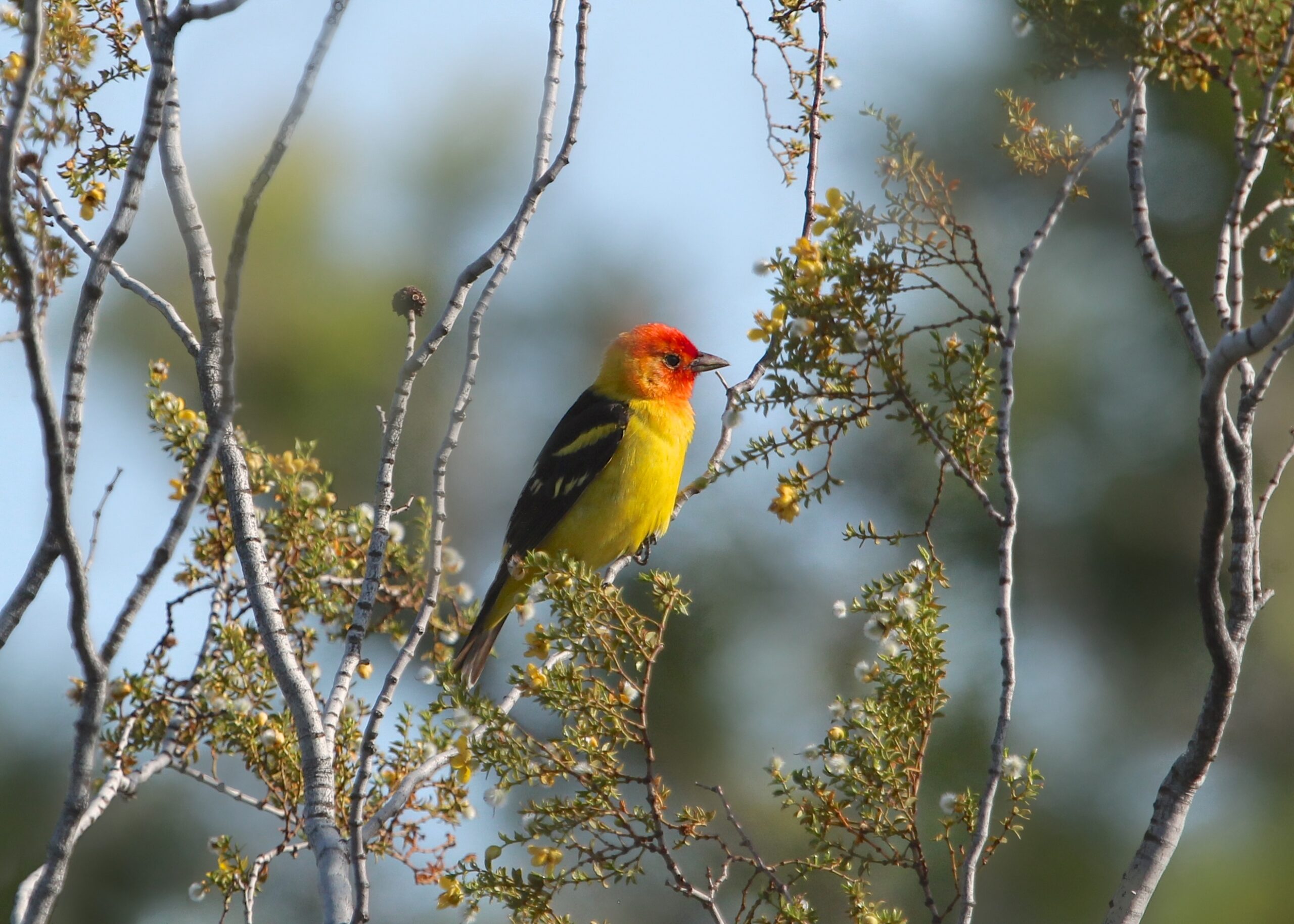
Photo by Vagabond54 courtesy of Shutterstock
Why May Works
A few things line up in May that don’t line up any other time of year.
The first is migration. Capitol Reef sits along the flyway for a lot of western songbirds, and they move through in a concentrated rush from late April through mid-May. Western tanagers, Bullock’s orioles, yellow warblers, and black-chinned hummingbirds all tend to arrive in this window. Some settle in to nest. Others pass through on their way north.
The second is the trees. The Fruita cottonwoods and the orchard canopy are just filling in, which means birds are visible in a way they won’t be once the leaves thicken. You can actually see them.
The third is temperature. The morning air is cool enough to bird comfortably from dawn until midday. By July you’ve got a pretty narrow window before the heat makes patience difficult.
Who You’re Likely to See
A short list of what’s reliably around in May. We’ve kept it to birds you have a real chance of spotting without a scope and a week of patience.
- Western tanager. Impossible to miss if they’re in the cottonwoods. Yellow body, black wings, red-orange head. They arrive in late April and stick around through summer.
- Bullock’s oriole. Nests in the Fruita cottonwoods. Orange and black, about the size of a robin. They weave pendulous pouch nests that often persist on the branches after the season ends.
- Yellow warbler. Small, bright, vocal. The orchards are thick with them in May.
- Black-chinned hummingbird. Check the blooming fruit trees and the campground loop.
- Canyon wren. Year-round resident, but spring is when they sing the most. Their call is one of the most distinctive sounds in the park — a cascading series of whistled notes going down the scale. Once you’ve heard it, you recognize it everywhere.
- Pinyon jay. Larger than a scrub jay, blue, and traveling in loud family groups. If you hear a lot of calls at once and it sounds like an argument, it’s probably them.
- Peregrine falcon. Less common but worth knowing. They nest on the cliff faces. Best chances are in the morning, along the canyon rims.
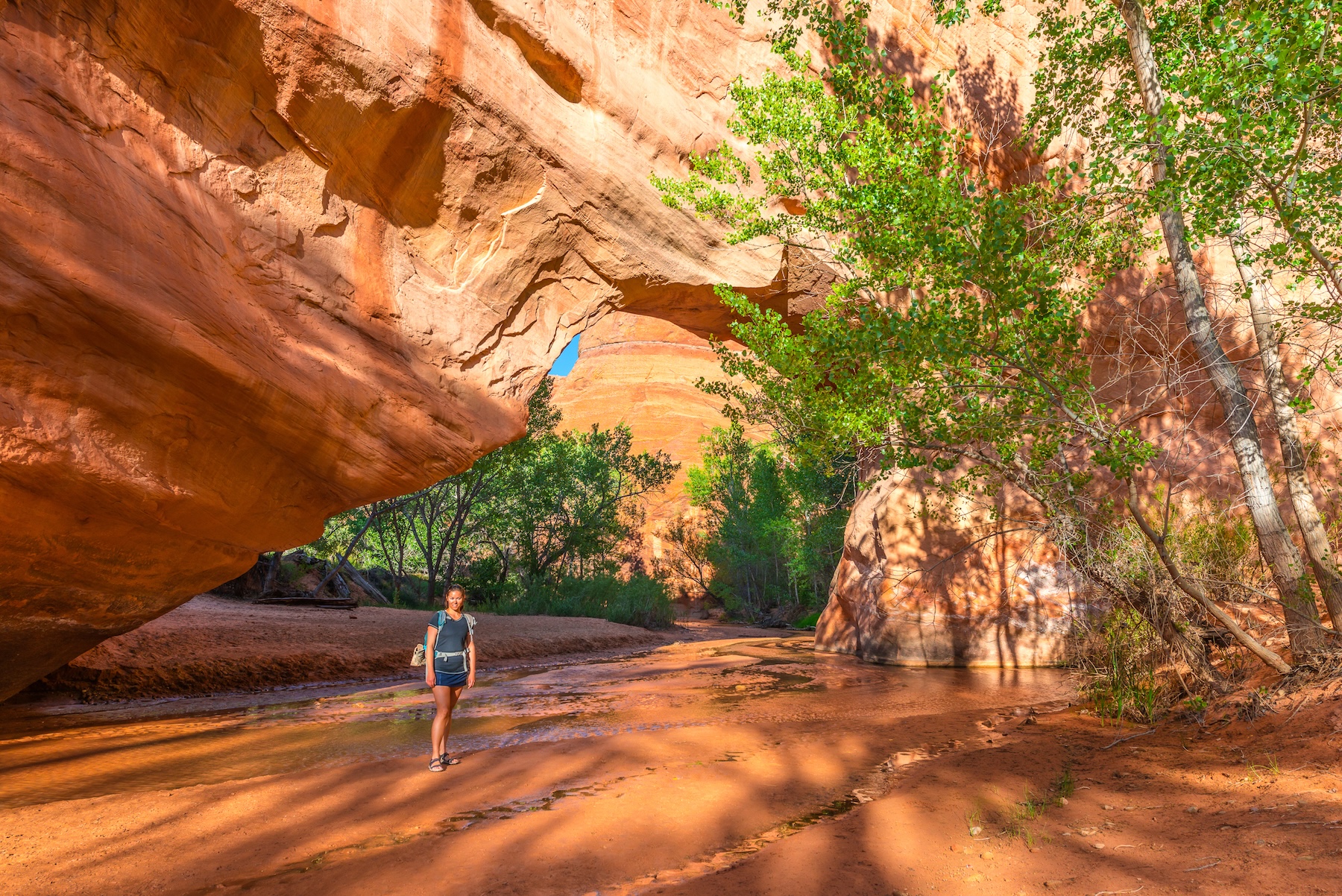
Photo by Kris Wiktor courtesy of Shutterstock
Where to Look
A few spots to check in a half-day:
- Fremont River Trail. Easy, about 2 miles round trip, follows the river through Fruita. Arguably the single best birding trail in the park. Best done first thing in the morning.
- The orchards and campground. Walk the paths quietly. The orchard canopy concentrates songbirds, and the campground trees are full of activity at dawn. (You don’t need to be camping to walk through — just be respectful of the people who are.)
- Sulphur Creek. Riparian corridor, less visited. Good for warblers and flycatchers.
- Ripple Rock Nature Center area. The trees around the nature center reliably have activity, and the center itself has a small, informal bird list and field guides you can flip through if something’s stumping you.
What to Bring
Nothing exotic:
- Binoculars. 8×42 is the standard for a reason. If you only have an old pair from someone’s attic, bring those. They’ll do.
- A field guide or the Merlin app on your phone. The song ID feature on Merlin is particularly useful here, because a lot of birding at Capitol Reef is hearing something before you see it.
- Water and a hat. You’ll be up early and out for a while.
- Patience. This is the real one. Standing still for ten minutes in a spot that looks empty almost always turns up something.
Sit on a bench in the campground at 6:30 AM in mid-May. You’ll see half this list inside an hour.
Worth Looking Up
Birding isn’t what most people plan a Capitol Reef trip around, and we get it. The park has bigger, louder things going for it. But May offers a quiet window when the trees are full and the desert is alive in a way it isn’t the rest of the year. It would be a shame to walk through Fruita without looking up.
If you’re staying with us and want to get serious about it, ask at the front desk. A couple of us keep a pretty active eye on what’s coming through.